

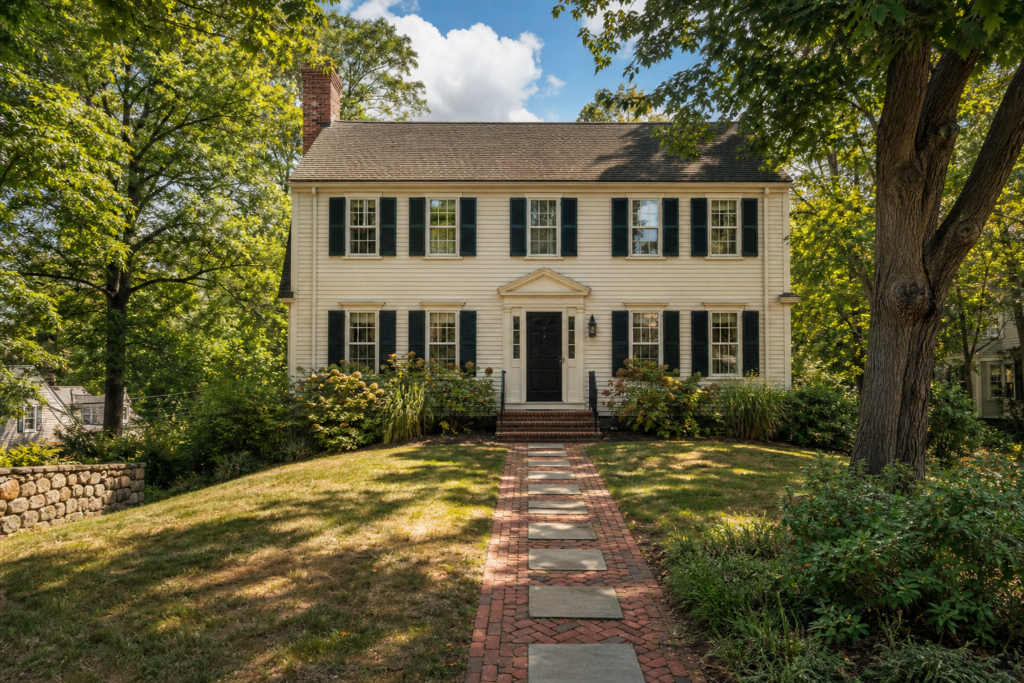
What should I know before relocating to the Boston Suburbs, MA?
You should know that Boston’s suburbs are not one market but dozens of distinct communities, each with different price points, school systems, commute options, and personalities, and choosing the right one requires local expertise, not just online browsing.
Why This Matters Right Now in the Boston Suburbs
The Boston suburban housing market in 2026 is one of the tightest in the country. Massachusetts is the only state where more homes are under agreement than are actively available for purchase: 949 pending sales against just 825 active listings. That ratio tells you everything about the demand pressure you’re walking into.
At the same time, this is a two-tier market. Well-priced homes in Needham, Newton, and Wellesley still go under contract within weeks, while overpriced listings languish. The Greater Boston median single-family sale price hit $1,032,500 in April 2026, and mortgage rates are hovering around 6.47%. If you are relocating for a biotech role in Cambridge, a finance position downtown, or a remote-friendly job that just needs occasional office access, understanding how these suburbs actually differ is the single most important thing you can do before signing anything.
How the Boston Suburbs Break Down by Neighborhood and Price
Here is where most relocators get tripped up: they think “Boston suburb” is a category. It is not. It is a spectrum, and the differences between towns separated by a single intersection can mean hundreds of thousands of dollars and entirely different lifestyles.
Premium Inner-Ring Towns (Newton, Brookline, Belmont): Newton leads with a median single-family price of $1,511,500, which is 71% above Boston proper. Newton is actually 13 distinct villages, each with its own character. Walk down Walnut Street in Newton Centre and you will find boutique shops, Caffe Nero packed with remote workers, and the Green Line D-Branch stop right there. Brookline comes in at $1,299,999, and Somerville crosses the million-dollar mark at $1,047,000.
Elite School Suburbs (Wellesley, Lexington, Winchester, Needham): Typical home prices in Lexington range from $1.2M to $1.6M or more. Needham offers a similar profile with exceptional schools and a commuter rail connection. These communities draw families who prioritize public education above almost everything else.
MetroWest Value Corridor (Framingham, Natick, Waltham): This is the strongest growth cluster in 2026, with transaction volume up 19.3% and prices up 10.4% year over year. Waltham offers the most accessible inner-ring price point at around $865,000 with a favorable residential tax exemption for owner-occupants.
What I tell my clients who are relocating is this: do not start with a town name. Start with your commute requirements, your school preferences, and your budget ceiling, then let those three factors narrow the list. Having closed over 252 transactions in the Boston suburbs over 25 years, I have seen too many families fall in love with a town online only to realize it does not fit their daily life.
Schools Are the Real Currency in the Boston Suburbs
So what actually drives prices in these communities? Schools. It is not a cliché here; it is the fundamental market force.
Lexington High School, located at 251 Waltham Street, enrolls roughly 2,318 students with an 11.36 student-to-teacher ratio and has produced two Nobel laureates. Lexington earns a number-three ranking among the best suburbs in the Boston area, with top-tier public school scores. Newton South High School is consistently rated among the top 3% of public high schools nationally and offers more than 30 AP courses. Needham and Wellesley round out the group of perennial top performers according to the Massachusetts Department of Elementary and Secondary Education.
One family I worked with relocated from Austin, Texas for a biotech position in Cambridge. They initially focused exclusively on Cambridge condos because of the short commute. After we mapped out school ratings, lot sizes, and total cost of ownership, they ended up in Needham, where their two kids enrolled in a school system that rivaled the private school they had been paying $40,000 a year for in Texas. They saved money and gained a backyard. That is the kind of outcome that only comes from understanding the full suburban landscape.
What Your Budget Actually Buys in the Boston Suburbs
Ready for the honest numbers? The cost of living in the Boston metro is roughly 6.9% above the national average, and housing is where that gap really shows.
- $600K to $900K: You are looking at MetroWest towns like Framingham, Natick, or Waltham. Condos and smaller single-family homes. Waltham’s FY 2026 residential tax rate of $10.32 per $1,000, combined with a $317,643 residential exemption, makes it particularly attractive for owner-occupants.
- $900K to $1.3M: This range opens up Needham, parts of Lexington, and entry-level Newton villages. Expect colonial-style homes on moderate lots with good school access.
- $1.3M to $2M: Core Newton Centre, Brookline, Wellesley, and the best streets in Lexington. This is where you see Walnut Street walkability, Crystal Lake summer swims, and the Minuteman Bikeway a short bike ride from your front door.
- $2M and above: Weston, Dover, Lincoln, Concord, and Chestnut Hill. These luxury-belt towns are currently experiencing a correction, with buyers negotiating 5% to 8% off list price. If you are in this range, I recommend building 60 to 110 days of search time into your timeline.
What does that actually mean for your household income? To comfortably buy at the suburban median, you typically need a household income between $150,000 and $250,000 or more, depending on your down payment and debt profile. The metro’s median household income exceeds $100,000, so many professional relocators are well-positioned, but it is still essential to get pre-approved before you start touring homes.

Commute, Transit, and the Realities of Getting Around
You cannot evaluate a Boston suburb without understanding your commute. This is where relocators from car-centric cities often miscalculate.
Newton has the Green Line D-Branch, which means you can stand on the platform in Newton Centre and be at Park Street downtown in about 25 minutes. That is rare for a suburb at this price point. Needham has commuter rail service on the Needham Line, which feeds directly into Back Bay and South Station. Lexington, despite its prestige, has no direct MBTA rail, so most residents drive to Alewife Station in Cambridge and take the Red Line from there, adding 25 to 35 minutes off-peak.
A monthly MBTA pass costs around $90 for buses, trains, and ferries within the subway zone, with commuter rail passes running higher depending on the zone. Many hybrid workers I work with choose suburbs based on a “two-day-a-week commute” calculation rather than a daily one, which has opened up towns like Concord and Sudbury that were previously considered too far.
Timing Your Move and Navigating the Boston Market Rhythm
When should you actually make your move? The spring market from March through June is the most competitive. Homes are currently averaging 33 days on market across the metro, down 8% year over year, and 91% of homes sell for over 95% of their listing price. In premium areas like Belmont and Newton, well-priced listings can go under contract within two to three weeks.
For relocators, what I always recommend is this: begin your search 90 to 120 days before your target move date. If you are starting a new position in September, that means actively touring by late May. Also be aware of the September 1st lease cycle. Locally known as “Allston Christmas,” this is when a huge number of leases turn over simultaneously, creating chaos in the rental market if you need a temporary landing spot.
One couple relocating from Chicago for dual healthcare positions at Mass General reached out to me in January. We spent February touring virtually, narrowed to three towns by March, and they were under contract on a home in Needham by mid-April with a June closing. That timeline felt tight to them at the time, but with preparation, it worked perfectly. Without that lead time, they would have been scrambling against the peak spring wave.
Winter moves, between October and March, offer cost savings on movers and slightly less buyer competition, though you will want to budget for Boston’s average 49 inches of annual snowfall and below-freezing temperatures from December through March.
Frequently Asked Questions About Relocating to the Boston Suburbs
What is the median home price in the Boston suburbs in 2026?
The Greater Boston median single-family sale price reached $1,032,500 in April 2026. Individual suburbs vary widely: Newton’s median sits at $1,511,500, Lexington ranges from $1.2M to $1.6M, and MetroWest towns like Waltham are closer to $865,000. Your target community will determine what you should expect to pay.
Which Boston suburbs have the best public schools?
Newton, Lexington, Wellesley, Winchester, and Needham consistently rank at the top of Massachusetts public school ratings. Lexington High School ranks among the top three to five in the metro area with a student-to-teacher ratio of 11.36. Newton South High School is rated in the top 3% nationally.
How long is the commute from the Boston suburbs to downtown?
It depends on your suburb and mode of transit. Newton Centre to downtown via the Green Line takes about 25 minutes. Lexington to Alewife Station plus the Red Line is roughly 35 to 50 minutes. Needham’s commuter rail reaches Back Bay Station in approximately 30 minutes. Hybrid workers increasingly prioritize a livable “two-day commute” rather than a daily one.
Is now a good time to buy in the Boston suburbs?
Inventory is gradually increasing, with year-over-year supply up about 15%. However, demand remains intense, especially under $1.5M. The luxury segment above $2M is showing buyer-friendly conditions with negotiable pricing. Your personal timeline, employment start date, and financial readiness matter more than trying to time the overall market.
What income do I need to buy a home in the Boston suburbs?
For a home at the suburban median, plan for a household income of $150,000 to $250,000 or more. The metro’s median household income exceeds $100,000. Your exact requirement depends on your down payment, existing debt, and the specific town you are targeting.
What are property taxes like in Massachusetts?
Massachusetts has moderate effective property tax rates compared to other Northeast states. Rates vary by municipality. Waltham’s FY 2026 residential rate is $10.32 per $1,000 of assessed value, with a $317,643 residential exemption for owner-occupants, which meaningfully reduces your actual bill.
Should I rent first before buying in the Boston suburbs?
Many relocators benefit from a short-term rental to learn the neighborhoods firsthand. However, avoid the September 1st lease cycle when competition peaks. If your employment timeline is firm and you have a knowledgeable local agent, buying directly can save you from paying Boston-area rents that average $3,400 or more per month for a one-bedroom.
What industries drive the Boston suburban economy?
Healthcare, biotech, life sciences, technology, finance, education, and professional services are the primary employers. The Kendall Square corridor in Cambridge houses Moderna, Vertex, Novartis, Sanofi, Takeda, Pfizer, and hundreds of startups. Total metro employment is approximately 2.8 million, with unemployment in the mid-3% range.
How competitive is the Boston suburban housing market?
Very. Within the metro, single-family homes priced between $800K and $1.5M are seeing bidding wars in more than 11 towns, with sale-to-list ratios reaching 105% to 120%. Preparation beats searching; you need to know your maximum price before a listing appears so you can act on day one.
Are there more affordable alternatives in the Boston suburbs?
MetroWest communities like Framingham, Natick, and Waltham offer significantly more accessible price points than the premium inner-ring towns. Quincy on the South Shore sits right at $675,500, essentially the statewide median, with Red Line access to downtown. Plymouth at $675,000 offers even more space if you can handle a longer commute.
The Bottom Line on Relocating to the Boston Suburbs
The Boston suburbs reward those who prepare. This is not a market where you browse casually for a few weekends and make an offer. It is a market where knowing the difference between Newton Centre and West Newton, understanding why Lexington commands its premium, and recognizing the value emerging in MetroWest can save you hundreds of thousands of dollars and years of commuting frustration.
With 25 years of experience helping relocating families find their right fit in the Boston suburbs, 130 five-star client reviews, and a track record as a RealTrends Top 1.5% agent and Boston Magazine Top Producer, I have guided buyers through every version of this market. Whether you are eyeing homes for sale in Needham, MA or weighing Newton against Lexington, the conversation starts with your priorities, not a property listing. Reach out to me, Nancy Moore, at Gibson Sotheby’s International Realty, (781) 424-3527, and let’s build your relocation plan around the life you actually want to live here.

Nancy Moore · Gibson Sotheby's International Realty
Vice President & Associate Broker — Needham & Boston Suburbs
Get in touch →