

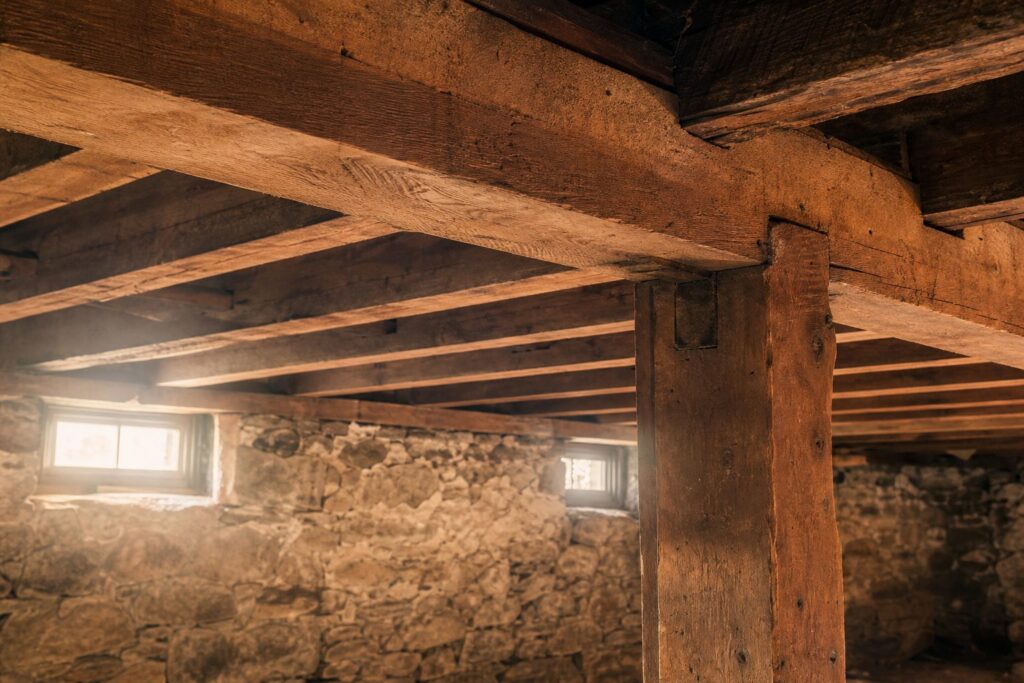
Why might the wood in a 100-year-old Needham home actually be stronger than the lumber in a brand-new build?
Older Needham homes were framed with slow-grown, dense old-growth timber that can outperform modern plantation lumber in structural integrity, rot resistance, and longevity.
Why This Matters Right Now in Needham
You are shopping for a home in one of the strongest real estate markets in MetroWest Boston. Needham’s median single-family sale price has climbed to approximately $2.36 million in 2026, a staggering 62% increase since 2022. Over half of the active inventory is less than a decade old, because builders who were focused on teardowns in neighboring towns shifted to Needham, and those homes are now hitting the market with modern floor plans and current finishes.
Here is the problem: the teardown-and-rebuild cycle is actively displacing Needham’s older housing stock. When a developer razes a 1920s colonial along Rosemary Street or a pre-war cape near Great Plain Avenue, irreplaceable old-growth timber framing gets sent to a landfill. It is replaced by plantation-grown lumber that may look similar on the surface but is structurally quite different. If you are a buyer drawn to character, craftsmanship, and longevity, you need to understand what is literally inside the walls before you write off an older home, or before you assume a new build is automatically the better investment.
Old-Growth Lumber vs. Modern Framing in Needham’s Historic Homes
What I tell my clients is something that surprises most of them: the wood in a 100-year-old Needham house may actually be stronger than the wood in a brand-new one. That sounds counterintuitive, but building science backs it up.
Older homes in neighborhoods like Needham Center and Charles River Village were framed with lumber harvested from slow-growing, mature trees. These old-growth species, often eastern white pine, oak, chestnut, or hemlock, grew in dense forests for 100 to 300 years before they were milled. The result was wood with exceptionally tight growth rings, sometimes 20 to 30 per inch. That tight grain translates directly into greater density, superior rot resistance, and remarkable structural stability over centuries.
Modern framing lumber comes from an entirely different source. Today’s Spruce-Pine-Fir (SPF) plantation wood is harvested after just 20 to 30 years of fast growth. It is engineered and graded to meet current building codes, and it absolutely does the job. But it typically has only 4 to 8 growth rings per inch, resulting in lighter, less dense boards that are more prone to warping, shrinking, and movement over time.
So when you are walking through a pre-war colonial on Greendale Avenue and the floors feel remarkably solid underfoot, that is not your imagination. It is 100 years of proven performance from timber that simply does not exist in commercial supply anymore.
What Needham’s Teardown Trend Means for Buyers Who Value Craftsmanship
The numbers paint a clear picture of what is happening. Needham’s dirt has not become dramatically more expensive. What has changed is what is being sold on that dirt: newer, bigger homes. The Daniel Kingsbury House near the intersection of Great Plain and Central Avenue, built around 1792 in the McIntosh Corner Historic District, is one example of a property whose owner chose to preserve rather than demolish. That renovation will expand the home to 3,600 square feet with an anticipated sale price above $2.5 million.
But other historic buildings in the district have not been as fortunate. Some were razed, and others lost their historical character when they were remodeled. The William Emerson Baker House on Grove Street is scheduled for demolition, and other significant properties face uncertain futures.
What does this mean for you as a buyer? Every year, the pool of authentic period homes in Needham shrinks. One couple I worked with was initially focused on new construction in Needham Heights near Highland Avenue. After touring a 1935 colonial and seeing the exposed original framing in the basement, the difference in wood quality stopped them in their tracks. They ended up purchasing the older home and investing in a targeted renovation that upgraded systems while preserving the structural bones. Their total cost came in under what a comparable new build would have cost on the same street.
Having closed over 252 transactions across this market in my 25 years, I can tell you that story is becoming more common. Buyers who take the time to understand what they are looking at in an older home often find remarkable value.
How to Evaluate Lumber Quality When Touring Needham Homes
You do not need a forestry degree to spot the difference between old-growth and modern lumber. Here is what to look for during your next showing:
- Check the basement. Exposed joists and beams in an older Needham home will often show tight, closely spaced growth rings. Count them. If you see 15 or more rings per inch, you are looking at old-growth timber that has already proven it can last.
- Knock on the baseboards and trim. Old-growth pine trim has a denser, more resonant sound compared to modern softwood trim. The weight and feel in your hand are noticeably different.
- Look at the subfloor. In many pre-1940s homes along streets like Rosemary Street in Needham Center, the subfloor planks are wide-board old-growth pine. These boards are often still perfectly flat after nearly a century, something modern plywood or OSB subfloor cannot replicate.
- Ask about the species. American chestnut, heart pine, and old-growth oak were common framing materials in early 20th-century New England construction. Some of these species are effectively extinct in commercial lumber today.
- Hire a structural engineer, not just an inspector. A general home inspection may flag surface issues like peeling paint or outdated electrical, but a structural engineer can assess whether the framing timber is still performing at full capacity. In my experience, they almost always are.
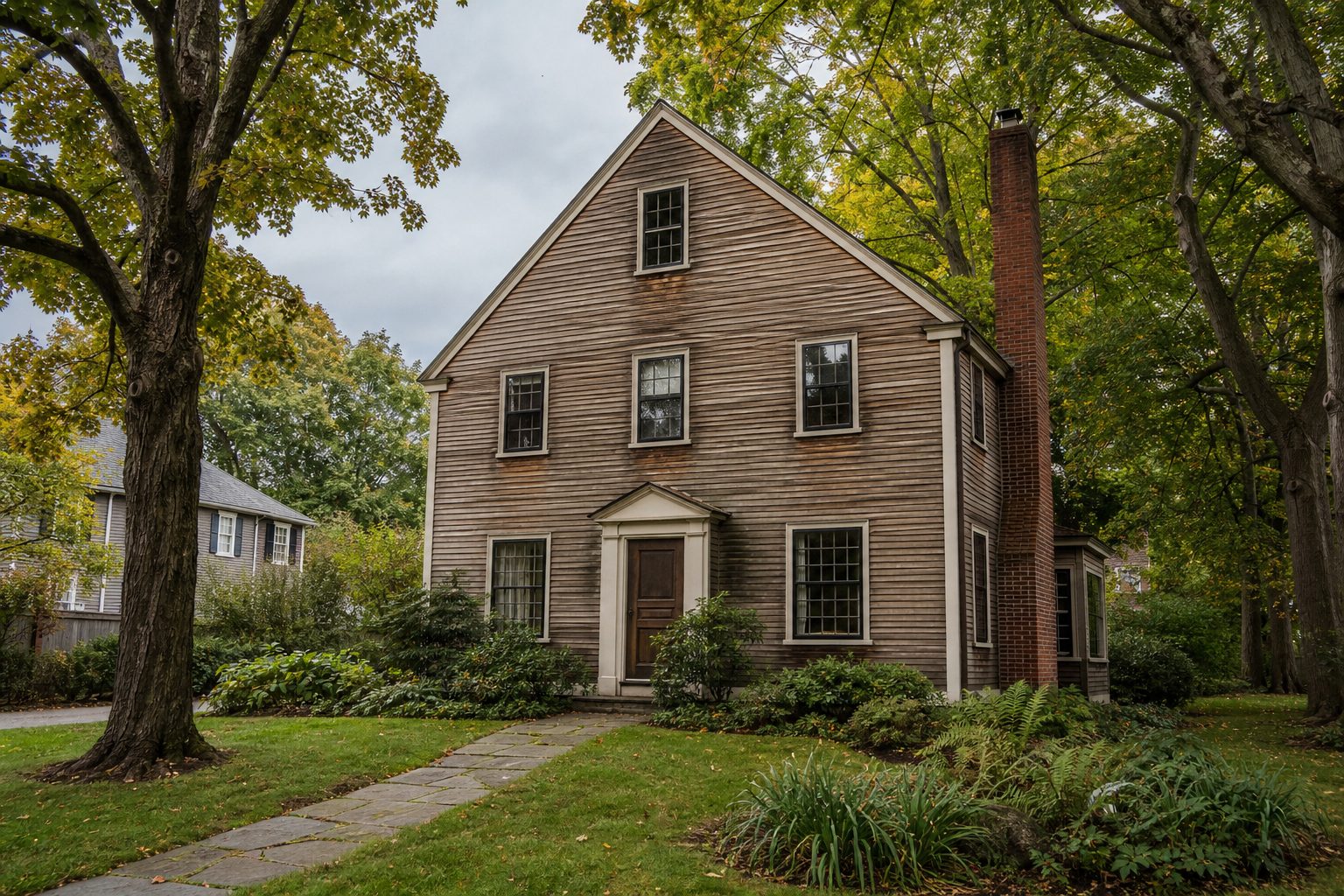
Renovation vs. New Construction: The Needham Math
One of the biggest concerns I hear from buyers considering a historic home is renovation cost. And it is a legitimate concern. When tube-and-knob wiring is discovered in an older Needham home, walls have to be opened. Foundations sometimes need to be excavated and repoured. A new house would have roughly half the construction costs of a comparable historic renovation, according to local builders who have worked on projects like the Kingsbury House restoration.
But here is the other side of that equation. In Needham Center, a 3-to-4-bedroom historic colonial within walking distance of Great Plain Avenue, the Town Common, and the commuter rail station typically lists between $1.4 million and $2.2 million. A comparable new build on a similar lot can push well past $2.5 million.
A recent buyer I worked with in Needham Heights found a 1928 colonial near Highland Avenue listed at $1.6 million. It needed about $300,000 in systems upgrades: new HVAC, updated electrical, and kitchen renovation. Even with that investment, her all-in cost of $1.9 million bought her a home with old-growth framing, original hardwood floors, and a walkable location steps from cafés and the commuter rail stop, all for significantly less than a new build two blocks away.
What I always recommend is running the full comparison before you decide. With 130 five-star reviews from past clients, many of whom faced exactly this decision, I have helped buyers navigate the renovation-versus-new-build calculus dozens of times.
What Needham’s Historic Protections Mean for Your Investment
If you are buying an older home in Needham, you should know what protections exist, and which ones are still evolving. The Needham Historical Commission was created to ensure the preservation of the town’s historical assets, and they are actively working on several fronts that affect your purchase.
- Demolition Delay Bylaws. The Commission has been reviewing and comparing Needham’s demolition delay bylaws with Massachusetts Historical Commission standards. These bylaws can buy time before a historic structure is demolished, but they do not permanently prevent teardowns.
- Local Historic Districts. The McIntosh Corner Historic District is one of two nationally registered historic districts in Needham. The Commission is exploring ways to promote the district and the potential for future Local Historic Districts, which would provide stronger protections.
- Age-Based Review Criteria. The Commission is considering a process where homes 75 to 100 years old would receive individual review, while homes older than 100 years would receive a full Commission review before any significant alterations or demolition.
For you as a buyer, these protections can work in your favor. A home within or near a historic district benefits from a measure of neighborhood stability. Your investment in restoration is less likely to be undercut by a teardown next door.
Frequently Asked Questions About Historic Homes and Lumber Quality in Needham
Is old-growth lumber really stronger than modern lumber?
Yes, in most structural comparisons. Old-growth lumber from slow-growing, mature trees has significantly tighter growth rings, often 20 to 30 per inch compared to 4 to 8 in modern plantation wood. This density gives it greater resistance to warping, shrinking, and rot. While modern lumber meets current building codes, it comes from faster-grown trees and is generally lighter and less dense.
How can I tell if a Needham home has old-growth framing?
Check the exposed joists and beams in the basement. Tight, closely spaced growth rings are the clearest indicator. Wider boards, denser trim, and solid subfloor planks are also telltale signs. Homes built before approximately 1940 in areas like Needham Center are more likely to have old-growth timber.
Does Needham have historic district protections for older homes?
Needham has two nationally registered historic districts, including the McIntosh Corner Historic District near Great Plain Avenue. The Needham Historical Commission is also exploring additional Local Historic Districts and updated demolition delay bylaws that would provide stronger protections for homes over 75 years old.
Are renovation costs higher for historic homes in Needham?
They can be. Unexpected discoveries like outdated wiring or foundation issues are more common, and local builders report that a historic renovation can carry roughly double the construction costs of a comparable new build. However, the lower purchase price of an older home often offsets this premium significantly.
What neighborhoods in Needham have the most historic housing stock?
Needham Center offers the densest concentration of pre-war colonials and capes, particularly along streets like Rosemary Street and Greendale Avenue. Charles River Village has a quieter, more wooded feel with older homes, though inventory is limited. Needham Heights also features a meaningful mix of historic properties alongside newer construction.
How does Needham’s teardown trend affect property values for historic homes?
As the supply of authentic period homes shrinks, well-maintained or thoughtfully renovated historic properties can command premium pricing. The Daniel Kingsbury House renovation, for example, is anticipated to sell above $2.5 million after expanding to 3,600 square feet while preserving its colonial character.
What species of wood were used in Needham’s oldest homes?
Eastern white pine, oak, American chestnut, and hemlock were common framing and finish materials in early New England construction. Several of these species, particularly American chestnut, are no longer commercially available, making the wood in these older homes literally irreplaceable.
Should I get a structural engineer instead of a standard home inspector?
For any historic home, I strongly recommend both. A general inspector evaluates systems and surface conditions, but a structural engineer can assess whether century-old framing timber is still performing at full capacity. In the vast majority of cases in Needham, old-growth framing passes with flying colors.
What is the price range for historic homes in Needham Center?
Expect to pay between $1.4 million and $2.2 million for a 3-to-4-bedroom single-family historic home within walking distance of downtown Needham Center. This is typically below the median for new construction in the same area, which can exceed $2.5 million.
How do Needham’s schools factor into the decision to buy a historic home?
Needham Public Schools earn an A+ rating and rank in the top 5% of Massachusetts public schools, with math proficiency at 73% versus the 43% state average and reading proficiency at 71% versus 45%. Needham High School carries a 99% graduation rate and an average SAT score of 1,360. School quality supports property values regardless of whether you buy old or new.
The Bottom Line on Historic Homes and Lumber Quality in Needham
You are making one of the biggest financial decisions of your life, and in a market where Needham’s median single-family price has reached $2.36 million, the details matter. The lumber inside the walls is one of those details. When you walk through a 1920s colonial near the Town Common and the floors feel solid in a way that a new build simply does not match, that is not nostalgia. It is old-growth timber doing what it has done for a century, and what modern plantation lumber may not be able to replicate.
If you are drawn to Needham’s historic homes and want guidance from someone who understands both the building science and the market dynamics, I would love to help. As a top real estate agent in Needham, MA with 25 years of experience and recognition as a RealTrends Top 1.5% agent and Boston Magazine Top Producer, I have helped hundreds of buyers find exactly the right home. Reach out to me, Nancy Moore, at Gibson Sotheby’s International Realty, 936 Great Plain Ave, Needham MA 02492, or call (781) 424-3527. Let’s find the home that was built to last.

Nancy Moore · Gibson Sotheby's International Realty
Vice President & Associate Broker — Needham & Boston Suburbs
Get in touch →