

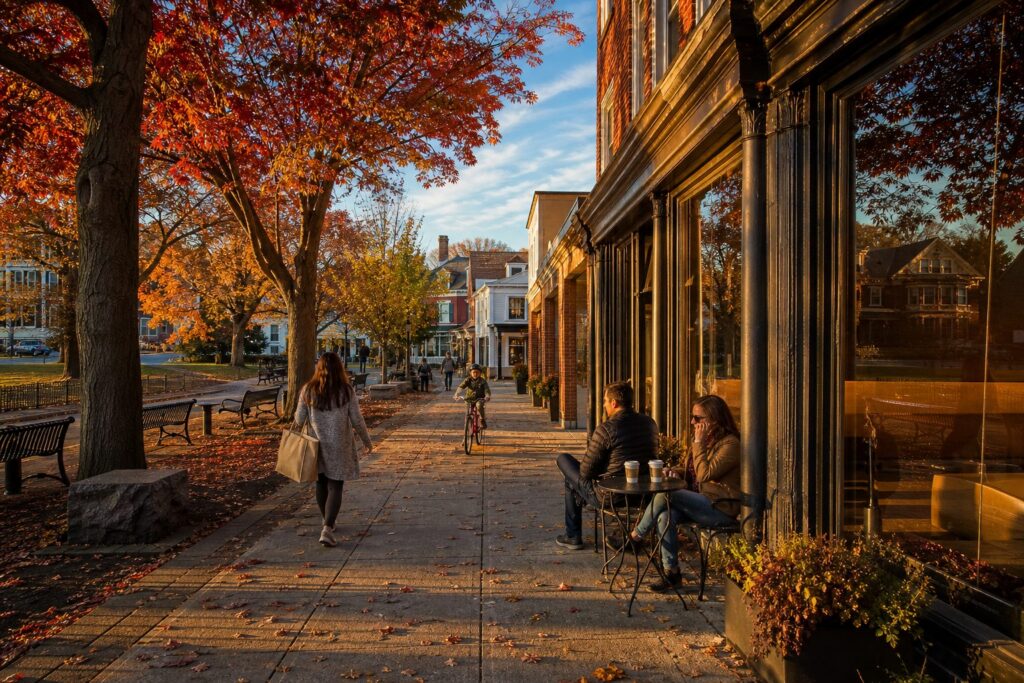
What is it like to live in Newton, MA?
Newton offers the best of both worlds: the convenience and culture of being minutes from downtown Boston, paired with the tree-lined streets, top-rated schools, and walkable village centers of a well-established suburban community.
Why Newton, MA Matters for Your Relocation Right Now
If you’re considering a move to the Greater Boston area, Newton deserves a spot at the very top of your shortlist. Often called the “Garden City,” Newton is not one neighborhood but rather 13 distinct villages, each with its own personality, shops, restaurants, and community feel. That distinction is important because choosing the right village is often more important than choosing Newton itself.
What I tell my relocating clients is this: Newton’s structural advantages are not going away. You’re looking at limited developable land, a school district that ranks 34th out of 348 in Massachusetts, excellent MBTA transit access, and a 20-minute commute to downtown Boston. With 25 years of helping families find their footing in this market and over 252 transactions closed, I can tell you that Newton consistently delivers on the lifestyle promises it makes, and the data backs that up.
The median household income here is $198,627, and the population of roughly 91,039 continues growing at a steady 0.33% annually. This is a community of professionals, educators, and families who chose Newton deliberately, and the demand to get in has only intensified.
Understanding Newton’s 13 Villages Before You Move
Here’s something that surprises nearly every relocating buyer I work with: Newton is not a single, uniform suburb. It’s 13 villages stitched together, each one functioning almost like its own small town. The village you pick will shape everything about your daily life, from your kids’ school assignments to your morning coffee spot to your commute.
Let me give you a quick sense of the range:
- Chestnut Hill sits at the top of the market with average single-family prices near $2.85M, close to Boston College, with a prestigious feel
- Waban follows at approximately $2.56M, known for being quiet and deeply family-oriented
- Newton Centre runs $1.4M to $1.6M and delivers the fullest walkable village experience, with restaurants, boutiques, and the Green Line D Branch right at its core
- Newtonville offers median prices of $1.1M to $1.35M with commuter rail access and a buzzing downtown along Washington Street
- Auburndale and Nonantum provide the best relative value in Newton at $900K to $1.2M, with prices up 7 to 9 percent year-over-year as buyers discover them
One family I worked with recently relocated from Charlotte and initially assumed they needed Newton Centre because it was the name they kept hearing. After we spent a Saturday morning walking West Newton Square and exploring the Victorian homes along the West Newton Hill Historic District, they realized that village was actually the better fit for their lifestyle and budget. They found a beautifully preserved Colonial on Chestnut Street for significantly less than they would have spent in Newton Centre, and they love the neighborhood more than they ever expected.
So how do you figure out which village is right for you?
Schools in Newton, MA: What Relocating Families Need to Know
If schools are driving your move, Newton will not disappoint. The district includes 15 elementary schools, four middle schools, and two high schools. Newton South High School ranks 12th out of 349 Massachusetts high schools, and Newton North High School ranks 26th. The district as a whole holds a 5-star rating from SchoolDigger.
What makes the school system especially relevant for village selection is the feeder pattern. Elementary schools are geographically distributed across the 13 villages, allowing many students to walk to their local school. Those elementary schools feed into specific middle schools, which then funnel into either Newton North or Newton South.
For example, families in Waban typically feed through Charles E. Brown Middle School, which holds a 9.4 out of 10 MySchoolScout rating and ranks 8th out of 484 Massachusetts middle schools, before heading to Newton South. That feeder pathway creates intense demand for homes in specific neighborhoods.
What I always recommend is identifying your preferred high school first, then working backward through the feeder system. With 130 five-star reviews from past clients, many of whom are relocating families, I’ve walked this path hundreds of times. The school question is usually the first conversation we have.
The Newton, MA Commute: Transit, Highways, and Daily Life
Your daily commute will likely be one of the most important factors in choosing a village. Newton sits on the western side of Greater Boston with quick access to the Massachusetts Turnpike, Route 95/128, and multiple MBTA options.
The Green Line D Branch connects Newton Centre directly to downtown Boston in 25 to 35 minutes. The Mass Pike and Route 95/128 on-ramps are reachable in under five minutes from most villages. In Newtonville, the commuter rail on the Framingham/Worcester Line puts Downtown Crossing under 20 minutes away.
The average commute time for Newton residents is 26.6 minutes, and the most common commute method is driving alone, with an average of two cars per household. But one thing that sets Newton apart is how many daily errands you can accomplish without ever getting in your car. The walkable village centers, with their independent shops, restaurants, and services, reduce the “errand-running” driving that eats up suburban life in so many other communities.
For professionals headed to Longwood Medical Area, the Financial District, or Cambridge, Newton Centre and Newtonville are arguably the best-positioned villages in the city. A recent client who accepted a position at a Longwood Medical Area hospital was thrilled to discover she could take the Green Line door to door in under 30 minutes, skipping the stress of driving into Boston entirely.
What Newton, MA Housing Actually Costs in 2026
Let me be direct about pricing because sticker shock is real for relocating buyers, especially those coming from markets outside the Northeast. The median single-family home price in Newton crossed $1.5M in Q1 2026, up 7.3 percent year-over-year. The average price of a single-family home hit an all-time high of $2,039,983 in 2025, the first time it eclipsed the $2 million mark.
Here’s what the monthly math looks like at different price points:
- Median single-family home at $1.5M with 20% down: Estimated monthly principal, interest, taxes, and insurance near $8,600 to $8,700
- Entry-level village home at $1.1M with 20% down: Estimated monthly PITI around $6,200 to $6,500
- Well-located condo at $735K with 20% down: Estimated monthly PITI approximately $4,200 to $4,500
The residential property tax rate for fiscal year 2026 is $9.69 per $1,000 of assessed value, which frequently pushes annual tax bills above $15,000 for a standard single-family home. Many Newton purchases exceed conforming loan limits, so jumbo financing is common.
But here’s the perspective I share with my clients who are recognized as a RealTrends Top 1.5% agent and Boston Magazine Top Producer: over the past 20 years, Newton home values have increased 129 percent. The homes here hold and build value because the fundamentals that drive demand, schools, transit, limited land, and proximity to Boston’s job centers, are not going away.
The current 30-year fixed mortgage rate sits at approximately 6.47 percent as of mid-June 2026, down from 6.81 percent a year earlier. That gradual easing, combined with home prices forecast to rise another 2 to 4 percent this year, means waiting rarely works out in Newton’s favor.
Daily Life and Community in Newton, MA
Beyond the data, what does it actually feel like to live here? Residents enjoy over 300 acres of parks, including Norumbega Park, Cold Spring Park (a 73-acre gem with hiking trails, ball fields, and a dog park off Beacon Street), and the Charles River trails. Walking and biking trails thread through neighborhoods, and the Newton Free Library is one of the busiest public libraries in Massachusetts, serving as a true community hub with extensive programming year-round.
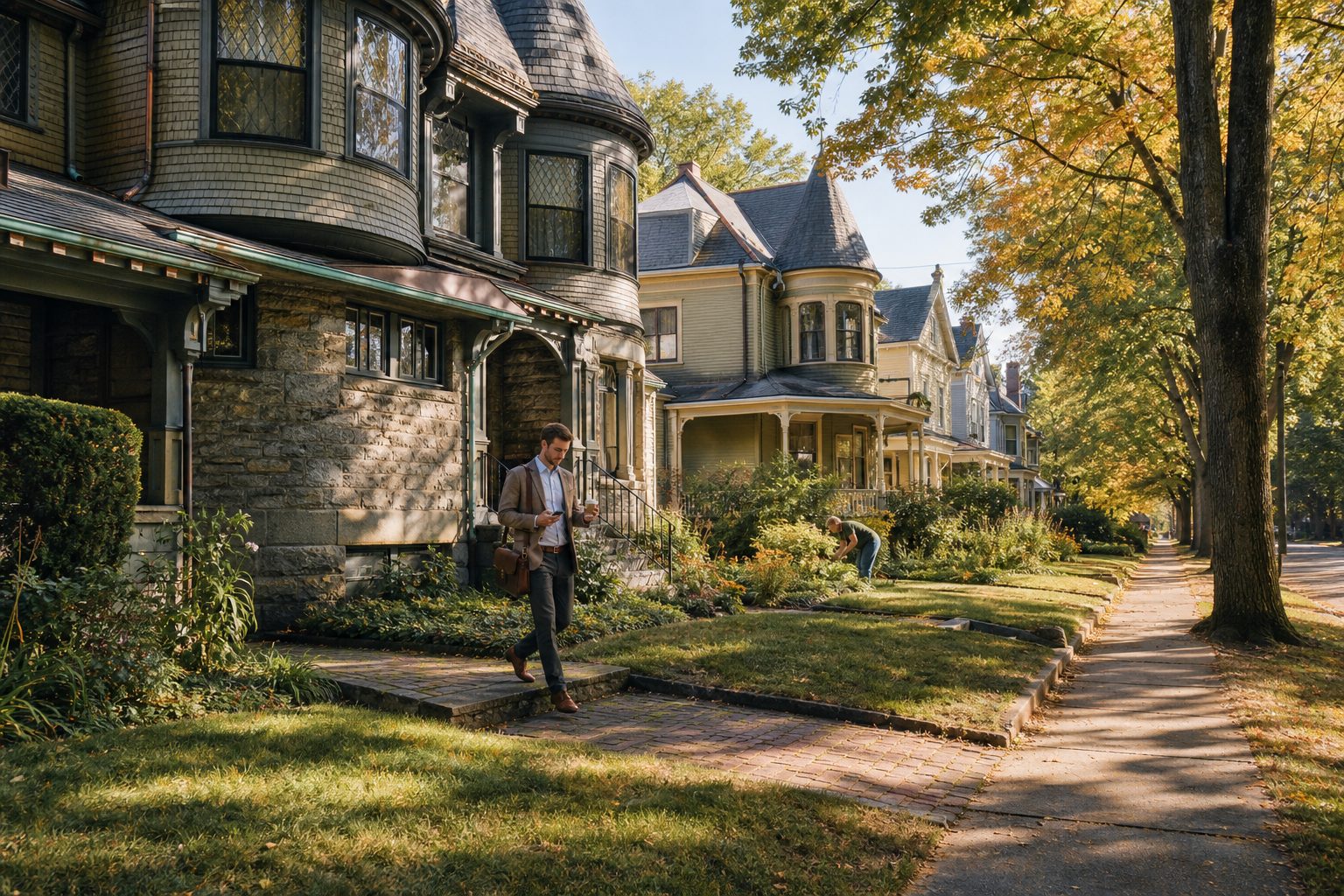
Newton Centre’s village green on Langley Road is the kind of place where you run into neighbors at Sweet Basil on a Tuesday night or grab a table at Lumiere for a farm-to-table dinner celebrating a milestone. In West Newton, the active business district along Washington Street features independent pizzerias, cafés, and local shops, all within walking distance of the beautiful Victorians and Queen Anne homes of the West Newton Hill Historic District.
Boston College, Lasell University, and William James College add an academic dimension to the city’s character. The median age of 43.4 reflects Newton’s appeal to established professionals and growing families alike, while a poverty rate of just 4.53 percent and an unemployment rate of 3.42 percent speak to the community’s economic stability.
With everything from historic homes and classic Colonials to modern new construction, Newton offers a wide range of housing options and a vibrant community atmosphere just minutes from the city. That variety is part of what makes it work for so many different people.
Frequently Asked Questions About Living in Newton, MA
Is Newton, MA a good place to raise a family?
Absolutely. Newton’s school district ranks among the top in Massachusetts, with Newton South High School ranked 12th and Newton North ranked 26th statewide. The 13 village structure means kids can often walk to their elementary school, and the city’s 300-plus acres of parks provide ample space for outdoor activities. The combination of safety, community engagement, and academic excellence makes Newton one of the strongest family communities in New England.
How far is Newton, MA from downtown Boston?
Newton sits roughly 7 to 10 miles west of downtown Boston, depending on which village you’re in. The Green Line D Branch connects Newton Centre to Boston in 25 to 35 minutes, and the commuter rail from Newtonville reaches Downtown Crossing in under 20 minutes. By car, the Mass Pike provides a direct route that typically takes 15 to 25 minutes outside of rush hour.
What are the best Newton, MA villages for first-time buyers?
Auburndale and Nonantum offer the best relative value, with single-family homes in the $900K to $1.2M range. Newtonville is another strong option at $1.1M to $1.35M, with commuter rail access and a walkable downtown along Washington Street. Condominiums throughout Newton typically range from $600K to $800K, which provides another pathway into the community.
How much are property taxes in Newton, MA?
The fiscal year 2026 residential property tax rate is $9.69 per $1,000 of assessed value. For a home assessed at $1.5M, that translates to roughly $14,500 to $15,000 annually. While this is significant, these tax dollars fund the highly rated school system, extensive parks, and well-maintained public infrastructure that make Newton so desirable.
What is the cost of living in Newton, MA compared to the national average?
Newton’s cost of living sits well above the national average, driven primarily by housing costs. The median home value is roughly 3.5 times the national average. Everyday expenses like groceries, transportation, and healthcare align with the broader Middlesex County premium. The median household income of $198,627, compared to the national median of $83,181, reflects the earning power that supports these costs.
Are there good restaurants and shops in Newton, MA?
Yes. Each of Newton’s 13 villages has its own commercial district. Newton Centre features destinations like Sweet Basil and Lumiere along Langley Road and Centre Street. West Newton Square offers independent restaurants and cafés along Washington Street. Newtonville’s compact downtown on Washington Street features coffee shops, restaurants, and local retailers. You will not lack for dining and shopping options.
What types of homes are available in Newton, MA?
Newton offers remarkable architectural variety: Victorian and Colonial homes in West Newton’s Historic District, stately Colonials and Craftsman bungalows in Newton Centre, modern new construction scattered throughout the city, and condos and townhomes ranging from $700K to over $1M. Single-family home prices range from around $900K in Auburndale to $2.85M in Chestnut Hill.
Is Newton, MA walkable?
Many of Newton’s villages are quite walkable, especially Newton Centre, West Newton, and Newtonville, where you can reach shops, restaurants, transit stops, and services on foot. The village green in Newton Centre and the business districts along Washington Street in West Newton and Newtonville are designed for pedestrian life. Trails and bike paths also connect many neighborhoods.
What is the rental market like in Newton, MA?
The average rent for an apartment in Newton is approximately $3,837 per month, which has remained relatively stable year-over-year. Rental inventory tends to be limited compared to Boston proper, with options concentrated near village centers and transit stops. Many renters use the rental period to explore different villages before purchasing.
How competitive is the Newton, MA housing market in 2026?
Newton remains a seller-favored market with approximately 1.8 to 2.2 months of supply, well below the 4 to 6 months that economists define as balanced. About 33 percent of homes sell above asking price, and well-priced properties in desirable villages typically go under contract within 10 to 21 days. Having strong financing in place and working with an experienced local agent are essential.
The Bottom Line on Living in Newton, MA
Newton consistently earns its reputation as one of Greater Boston’s most desirable communities because the fundamentals, schools, transit, village character, and proximity to the city, deliver on the promise every single day. Whether you’re drawn to the walkable energy of Newton Centre, the historic charm of West Newton, or the relative value of Auburndale, there is a village here that will feel like home.
Having helped over 252 families navigate this exact decision over 25 years, and with 130 five-star reviews from clients who have been through this process, I can tell you that the key to a successful Newton relocation is partnering with someone who knows these villages at a street-by-street level. If you’re ready to explore what life in Newton looks like for your family, I would love to help you find the right village. Reach out to me, Nancy Moore, at Gibson Sotheby’s International Realty, at (781) 424-3527 to start the conversation.

Nancy Moore · Gibson Sotheby's International Realty
Vice President & Associate Broker — Needham & Boston Suburbs
Get in touch →