

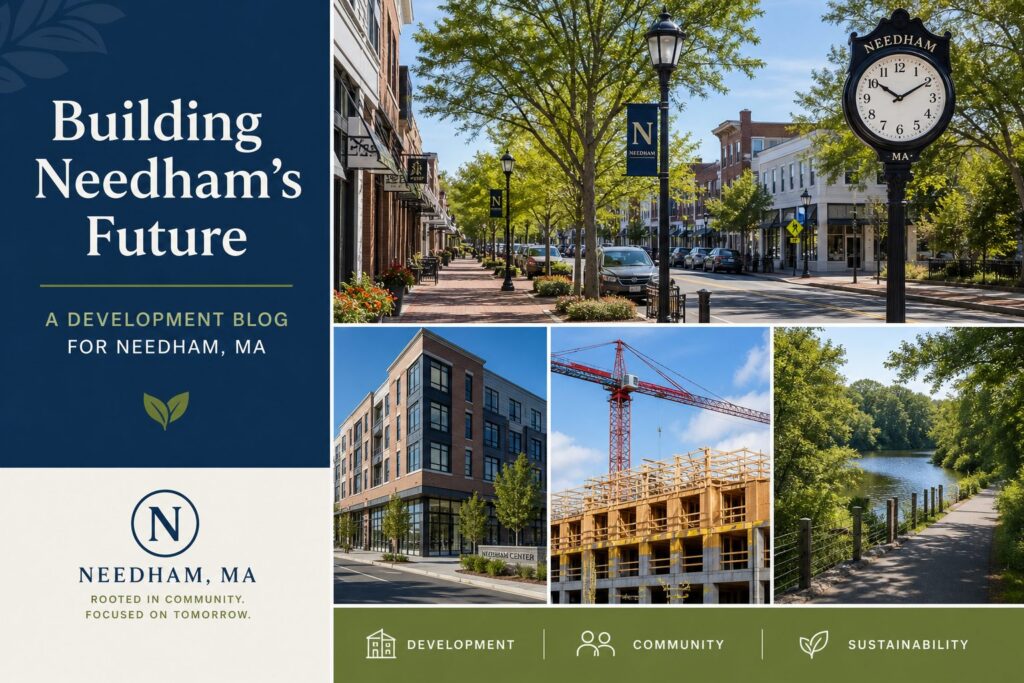
What are the biggest changes happening in Needham, MA, and how will they affect the town’s real estate market, walkability, and quality of life?
Needham is undergoing its most significant transformation in a generation, with MBTA zoning changes, major construction projects, and infrastructure upgrades reshaping what this town looks like, who can live here, and what your home could be worth.
Why These Needham Changes Matter Right Now
If you’re considering a move to Needham, or you already own here and want to understand what’s coming, this is the moment to pay attention. The town is no longer just debating change. Shovels are in the ground. Zoning maps have been redrawn. And the ripple effects will touch everything from your morning commute to your property assessment.
Having helped families buy and sell in Needham for 25 years, and having closed over 252 transactions in this market, I can tell you that what’s happening right now is different from the usual cycle of teardowns and new builds. This is structural. And whether you see it as an opportunity or a concern depends entirely on how well you understand the five developments I’m about to walk you through.
Development 1: Needham’s MBTA Communities Zoning, the Biggest Policy Shift in Decades
This is the one that changes everything else. The MBTA Communities Act, passed in 2021, requires towns served by commuter rail to zone for multifamily housing within half a mile of transit stations. Needham complied, and the result is a rezoning of roughly 100 acres forming the spine of the town along Highland Avenue, from Webster Street to Chapel Street to Chestnut Street.
So what does that actually mean for you?
It means that for the first time, Needham has opened the door to transit-oriented multifamily housing near its four commuter rail stops: Needham Heights, Needham Center, Needham Junction, and Hersey. This isn’t theoretical. Developers have already described the entitlement process under the new zoning as “incredibly straightforward,” and the first major project is already under construction.
What I tell my clients is this: the zoning change doesn’t mean your street suddenly becomes a construction zone. The rezoned areas are concentrated along Highland Avenue’s commercial corridor. But it does mean more housing types, more density near transit, and a different feel for the center of town over the next five to ten years.
One couple I recently worked with was relocating from Austin and had concerns about “overdevelopment.” After walking the rezoned corridor together and seeing where the boundaries actually fall, they felt much more comfortable. They ended up purchasing a Colonial on Rosemary Street, just steps from the Center, with full confidence in the neighborhood’s trajectory.
Development 2: The Highland Avenue and Carter Building Redevelopment in Needham
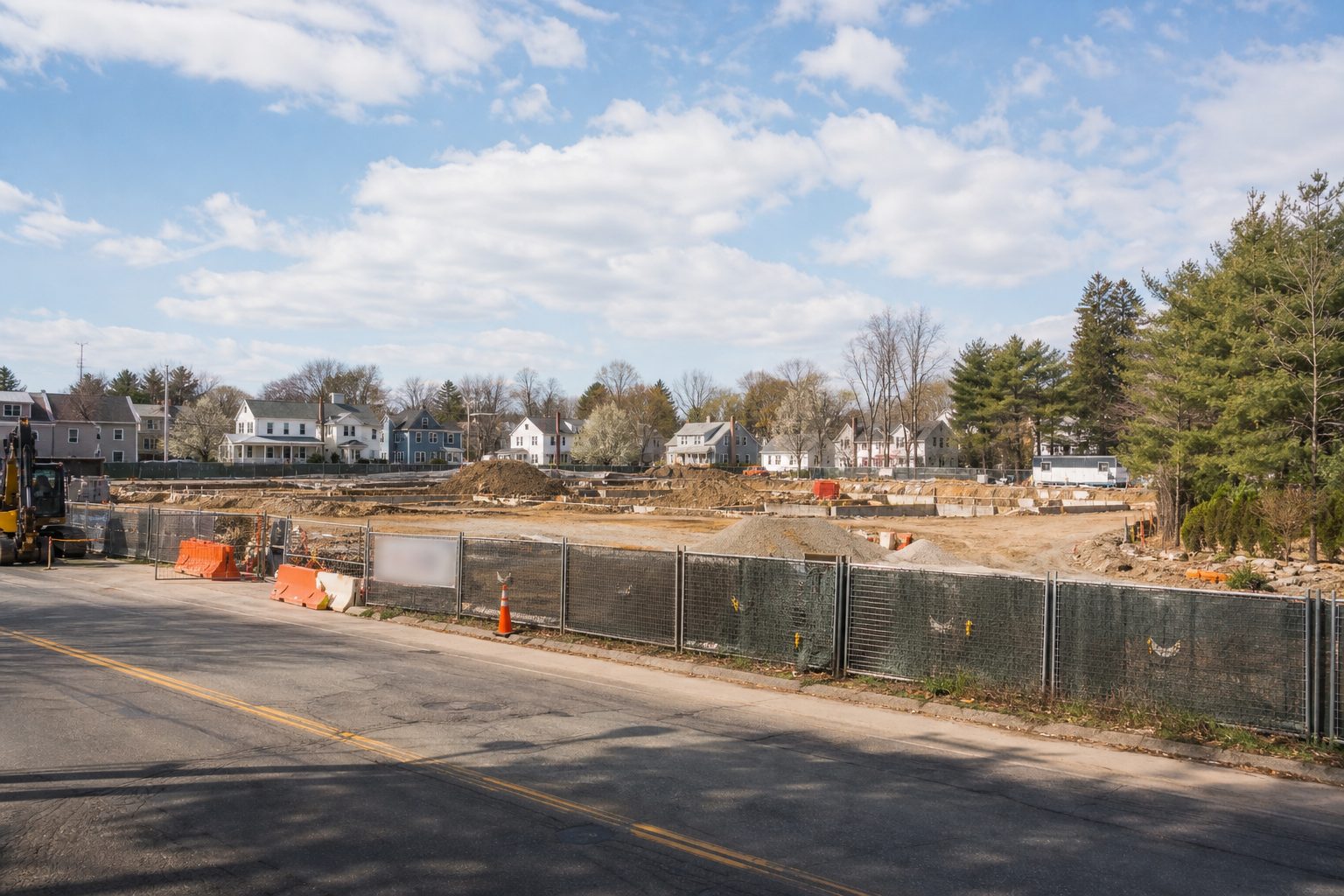
The 189-unit Greystar and Haseko multifamily project at 100 West Street is the most tangible proof that Needham’s zoning changes are producing real results. This project, built on the former site of an assisted living facility, is one of the first developments to move forward under the town’s updated zoning framework.
Here’s what you should know about it:
- Unit mix: Studios, one-, two-, and three-bedroom apartments
- Amenities: Playground, community garden, two pocket parks, fitness center, and library
- Design: Ground-level direct entry with a step-back to green space along Highland Avenue
- Timeline: Demolition is underway; vertical construction is expected to begin in spring, with delivery anticipated in fall 2027
This matters for Needham because it introduces a housing type the town has historically lacked: professionally managed rental apartments near transit and the town center. Whether you’re a downsizer looking to stay in Needham without maintaining a single-family home, or a young professional who grew up here and wants to come back, this project opens a door that was previously closed.
What this does not mean is that Needham is becoming Somerville. The scale is modest. The design integrates green space. And the location, along a commercial stretch of Highland Avenue, makes sense for added density.
Development 3: The Needham-Newton Corridor Infrastructure Upgrades
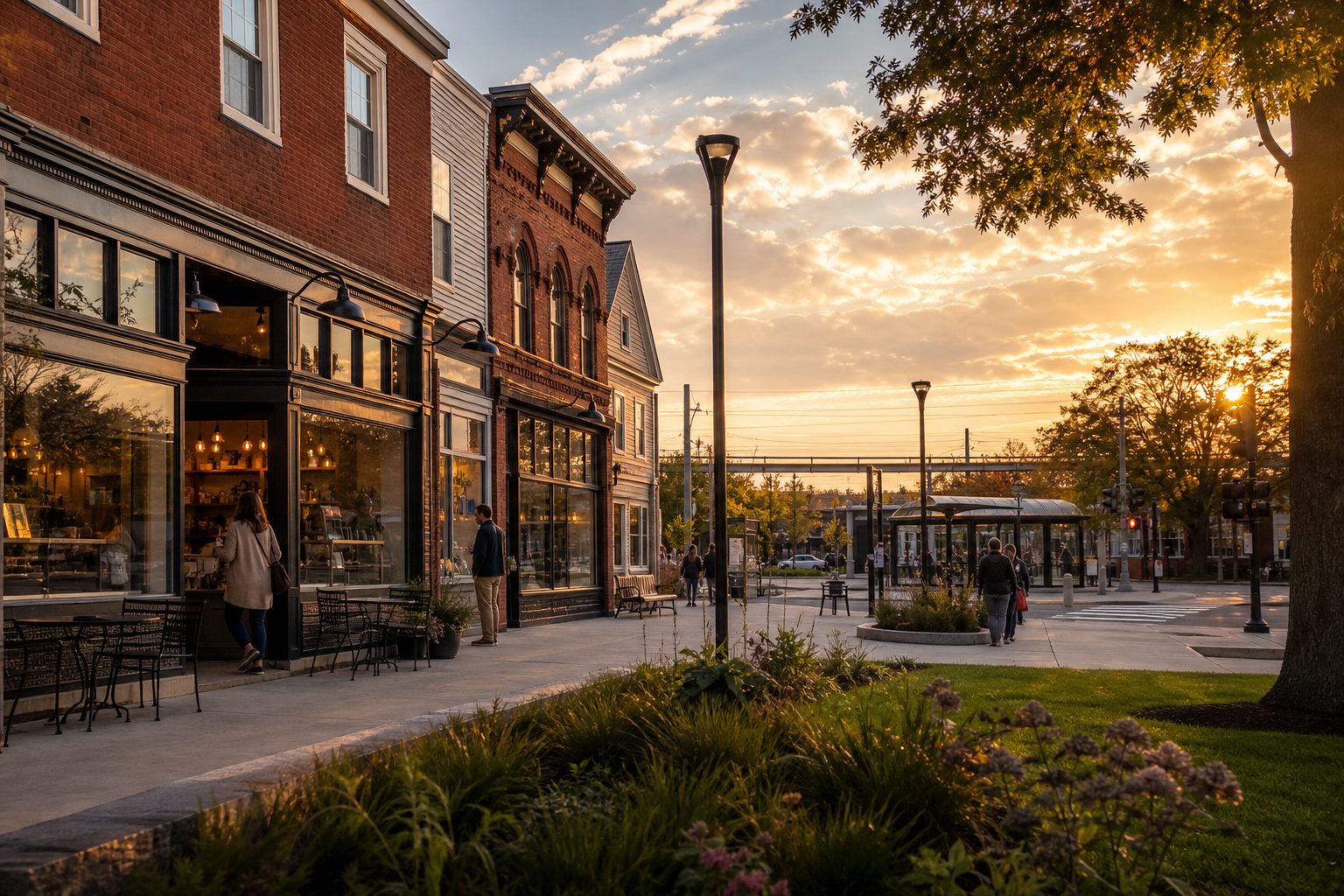
While the housing story grabs headlines, the infrastructure story underneath it is equally important for your daily life. MassDOT’s Needham-Newton Corridor Project includes curb, sidewalk, and bus stop reconstruction along Needham Street. This work continues weekdays through fall 2026.
Why should you care? Because infrastructure investment tends to follow (and reinforce) rising property values. Improved sidewalks, better crosswalks, and modernized bus stops make the commuter experience smoother, and they signal to the broader market that the state is investing in this corridor for the long term.
The Town of Needham has also completed streetscape work around the Town Common, adding improved lighting, plantings, and pedestrian connections between businesses and public spaces. If you’re relocating and walkability matters to you, Needham Center is becoming measurably more pedestrian-friendly, not less.
Development 4: Needham Center’s Evolution Into a True Town Center
Here’s where the pieces come together. Needham Center, anchored by the intersection of Great Plain Avenue and Chestnut Street, has always been the town’s social and commercial heart. But what I’m seeing, after 25 years in this market, is the Center evolving from a pleasant downtown into something with real gravitational pull.
Consider what’s already in place: Sweet Basil at 942 Great Plain Avenue, Hearth Pizzeria at 974 Great Plain Avenue, French Press Bakery and Café, and Needham House of Pizza, which has served the town since 1963. Volante Farms, a four-generation family business, remains a Needham institution. The Book Shop of Needham at 283 Chestnut Street gives the Center the kind of independent retail character that most suburbs have lost.
Now add the new housing coming online. Add the infrastructure improvements. Add the fact that two commuter rail stations sit within a quarter mile of the Center, with a 30 to 35 minute ride to Back Bay.
A recent client of mine, a downsizer selling a larger home in Birds Hill, told me she’d been dreading the idea of leaving Needham after 30 years. When she realized she could move into a walkable situation near the Center, keep her daily coffee ritual at French Press, and ditch the second car, her entire outlook changed. She’s staying in town, just in a different way.
That’s the real story of Needham Center’s future: it’s becoming a place where you can live, not just shop.
Development 5: More Housing Choice and Who Actually Benefits in Needham
So who wins when a town like Needham adds housing options? The answer is broader than most people expect.
- Downsizers: Long-time Needham homeowners who want to age in place without maintaining a 3,000-square-foot Colonial now have alternatives they didn’t have five years ago
- Young professionals: People who grew up in Needham, left for Boston, and now want to come back can find rental options near transit rather than needing to clear a $2 million mortgage
- First-time buyers: The median condo in Needham is running just above $1 million, which, while not cheap, is roughly half the median single-family price and represents a real entry point
- Relocating families: In the $1.5 to $2 million range, Needham currently has about 14 active single-family homes compared to just 4 in Wellesley. That’s three and a half times more inventory for a similar school district and commute profile
What I tell relocating families is that Needham’s value proposition compared to neighboring towns is actually getting stronger, not weaker, as more housing types come online. More options means more people who can say yes to Needham.
What These Needham Developments Mean for Home Values
This is the question I get from every seller and every buyer, so let me be direct: development doesn’t automatically mean values go up or down. What matters is location, property type, supply, infrastructure quality, and neighborhood desirability.
Needham’s median single-family sale price has climbed from $1,455,000 in 2022 to $2,359,500 in early 2026. That’s a 62% increase. The average residential property assessment jumped 22.28% in FY2025 alone, and the FY2026 tax rate sits at $10.83 per $1,000 of valuation. The average annual tax bill is now approximately $16,690.
Does new multifamily housing threaten those numbers? In my experience, not when it’s well-located near transit and commercial corridors. Properties with walkability and rail access near Needham Center are holding value better than more car-dependent streets. The new development reinforces what makes the Center desirable; it doesn’t dilute it.
But I’m also honest with clients: if your home is directly adjacent to a construction zone for the next 18 months, your selling timeline matters. Strategy matters. That’s where having a real estate agent in Needham, MA who understands the micro-market, block by block, makes the difference.
Frequently Asked Questions About Changes in Needham, MA
What is the MBTA Communities Act and how does it affect Needham?
The MBTA Communities Act requires towns with commuter rail service to zone for multifamily housing near transit stations. Needham has rezoned roughly 100 acres along the Highland Avenue corridor, from Webster Street to Chapel Street to Chestnut Street. This allows new multifamily projects to proceed near the town’s four rail stops without the lengthy special permit process previously required.
How many new apartments are being built in Needham?
The first major project is a 189-unit multifamily development at 100 West Street by Greystar and Haseko. The mix includes studio, one-, two-, and three-bedroom units with community amenities like a playground, garden, pocket parks, and fitness center. Delivery is expected in fall 2027. Additional projects may follow under the rezoned framework.
Will new development in Needham lower my property value?
Not necessarily. Needham’s median single-family price has climbed 62% from 2022 to early 2026. Transit-oriented development near commercial corridors historically supports, rather than undercuts, nearby home values. The key factors are location, housing type, and how well new projects integrate with the existing neighborhood character.
What does the Needham-Newton Corridor project include?
MassDOT’s project involves curb, sidewalk, and MBTA bus stop reconstruction along Needham Street. The work is ongoing weekdays and is expected to continue through fall 2026. It improves pedestrian safety and transit accessibility for the broader Needham and Newton corridor.
Is Needham Center becoming more walkable?
Yes. Between the Town Common renovation, new streetscape improvements with better sidewalks, crosswalks, and lighting, and two commuter rail stations within a quarter mile of the Center, walkability is measurably improving. The addition of new residents near the Center should also support more retail and dining options.
How does Needham compare to Wellesley for relocating families?
In the $1.5 to $2 million price range, Needham offers roughly three and a half times more single-family inventory than Wellesley. Both towns have A-plus school districts and strong commuter access. Needham gives many families more house per dollar and a more productive home search.
What are Needham property taxes in 2026?
The FY2026 residential tax rate is $10.83 per $1,000 of valuation. The average single-family tax bill is approximately $16,690, up about 7.5% from the prior year. This increase reflects the town’s continued investment in schools, infrastructure, and services.
How long does it take to commute from Needham to Boston?
The MBTA Commuter Rail Needham Line delivers you to Back Bay in approximately 30 to 35 minutes. Needham has four stops: Needham Heights, Needham Center, Needham Junction, and Hersey. By car, I-95 and Route 128 provide direct highway access.
Who benefits from the new housing options in Needham?
Downsizers who want to stay in town, young professionals who grew up in Needham and want to return, first-time buyers looking at the condo market (median around $1 million), and relocating families who benefit from a wider range of price points and housing types.
What will Needham look like in five to ten years?
The Highland Avenue corridor will have more mixed-use density, improved pedestrian infrastructure, and a more vibrant town center. The surrounding single-family neighborhoods are expected to retain their character. The broader trend is toward a more complete, walkable community with better housing diversity, without losing the suburban qualities that families move here for.
The Bottom Line on Needham’s Future
Needham is not standing still, and that’s a good thing. The five developments reshaping this town, from MBTA zoning to the 100 West Street project to infrastructure improvements, are creating a more connected, more livable, and more accessible community. Whether you’re relocating to the area, thinking about downsizing, or considering what your home is worth in this shifting landscape, the details matter.
With 130 five-star reviews and recognition as a RealTrends Top 1.5% agent, I’ve helped families navigate every stage of Needham’s evolution. If you want to understand exactly how these changes affect your street, your home, or your next move, I’d welcome the conversation. You can reach me, Nancy Moore with Gibson Sotheby’s International Realty, at (781) 424-3527. My office is at 936 Great Plain Ave in Needham, and I’m always happy to walk you through what’s happening, block by block.

Nancy Moore · Gibson Sotheby's International Realty
Vice President & Associate Broker — Needham & Boston Suburbs
Get in touch →