

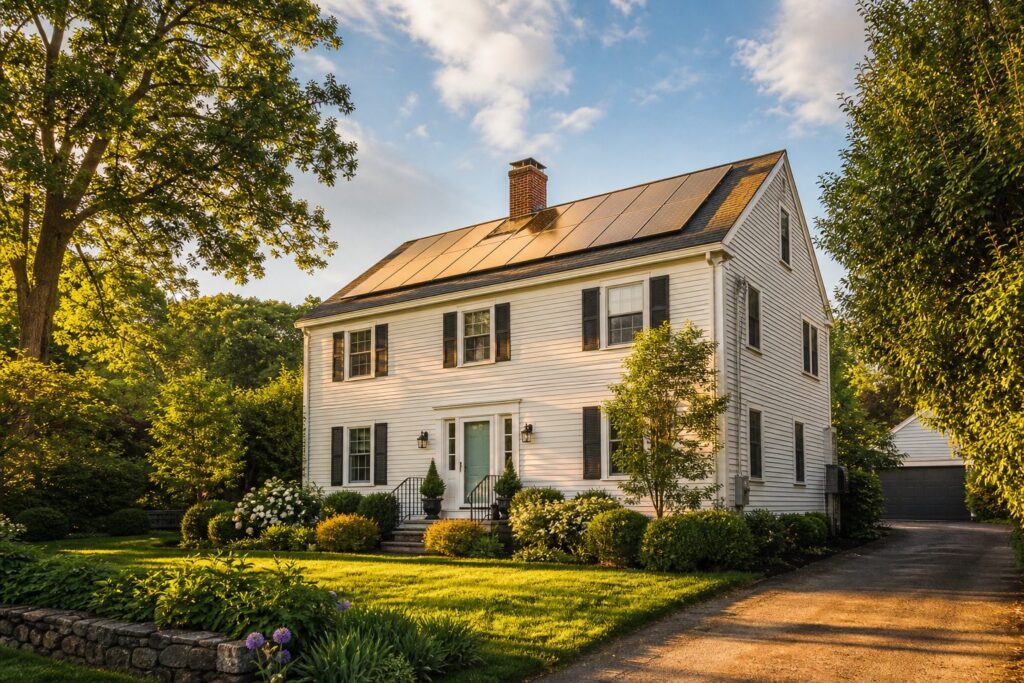
If you’re selling a home in the Boston suburbs, do solar panels actually increase your property’s value, or are they just a nice talking point?
Yes. Homes with owned solar panel systems in the Boston suburbs sell for approximately 4.1% more than comparable homes without them, and they tend to sell faster. On a Greater Boston median-priced single-family home, that premium can translate to more than $40,000 in added value at closing.
Why This Matters Right Now for Boston Suburban Sellers
If you’re preparing to list your Needham, Lexington, or Newton home in 2026, you’re entering a market where well-priced, well-prepared properties are moving quickly, but overpriced listings are sitting. The Greater Boston Association of REALTORS reports a median single-family price of $1,032,500 across the region, and homes are selling in a median of 33 days.
What does that mean for you as a seller? Every edge matters. And solar panels are one of the most tangible differentiators you can offer a buyer pool that is increasingly energy-conscious and budget-sensitive. With Massachusetts electricity rates running nearly double the national average (roughly 29 to 37 cents per kWh depending on your utility), buyers aren’t just looking at your kitchen countertops. They’re looking at your utility bills. Having helped over 252 families navigate the Boston suburban market over 25 years, I can tell you that energy efficiency has moved from a “nice to have” to a serious consideration at the offer stage.
How Much Value Do Solar Panels Add to a Boston Suburbs Home?
The data here is compelling, especially when you apply it to Boston suburban price points.
A Lawrence Berkeley National Laboratory study found that solar homes sell for approximately $4 per watt of installed capacity. For a typical 8kW residential system, that adds roughly $32,000 in value. Separately, national data shows solar-equipped homes selling for about 4.1% more than comparable non-solar homes. The U.S. Department of Energy puts the average resale premium at around $15,000 nationally, though that figure climbs significantly in high-value markets.
So what does that look like in your neighborhood? Let me put real numbers to it:
- Needham (median single-family in the $1.1M to $1.3M range): A 4.1% premium could mean $45,000 to $53,000 in added value
- Newton (median sold price around $1,511,500): That same percentage translates to roughly $62,000
- Lexington (single-family median near $1.98M): You’re looking at a potential premium north of $80,000
One couple selling their Colonial in Needham had installed a 9.2kW owned solar system four years before listing. When we marketed the home, we highlighted the system’s production history and their dramatically reduced Eversource bills. The property received three competitive offers within eight days, and the winning buyer specifically cited the solar system as a deciding factor over a comparable home two streets away.
These aren’t abstract numbers. In a market where buyers are scrutinizing carrying costs alongside purchase price, that monthly savings story is powerful.
Owned vs. Leased Solar Systems in Needham and Beyond
Here is the single most important distinction I share with every seller who has solar panels: the value premium applies to owned systems, not leased ones.
If you purchased your solar panels outright or financed them through a loan you’ve since paid off, the system transfers cleanly to the buyer as a home asset. The buyer gets the panels, the production, and the future savings without assuming any separate financial obligation. That is a genuine selling point.
A leased system is a different story entirely. With a lease, the solar company retains ownership of the panels. When you sell, the buyer must either assume your remaining lease payments or you need to negotiate a buyout. I’ve seen deals get complicated, and occasionally fall apart, because a buyer didn’t want to inherit a 15-year lease agreement with terms they had no say in.
What I tell my clients is straightforward: if you have a leased system and you’re planning to sell, call your solar provider now. Find out your buyout number. In many cases, purchasing the system before listing removes a potential deal-killer and converts what could be a liability into an asset worth tens of thousands of dollars.
Massachusetts Tax Advantages That Make Solar Even More Attractive to Buyers
Here’s where selling a solar home in the Boston suburbs gets even better. Massachusetts offers one of the strongest solar incentive packages in the country, and these benefits transfer to your buyer:
- 20-year property tax exemption: Solar installations are fully exempt from Massachusetts property tax assessment. Your panels won’t raise your tax bill, and they won’t raise the buyer’s either. In towns like Newton, where residential tax rates are already a significant carrying cost, this matters.
- Net metering credits that never expire: Eversource, National Grid, and Unitil are all required to offer net metering. When your panels produce more electricity than you use, the excess is credited at the full retail rate. Those credits roll over indefinitely, month to month, year to year.
- Massive long-term savings: According to EnergySage data, Massachusetts homeowners can expect to save an average of $154,721 over 25 years on electricity costs after accounting for the upfront system cost.
When you’re staging your listing presentation, these aren’t just features. They’re financial arguments. A buyer comparing two similar Colonials on Great Plain Avenue in Needham will look very differently at the one projecting $6,000 in annual energy savings versus the one with a $350 monthly electric bill.
What Can Reduce Your Solar System’s Resale Value?
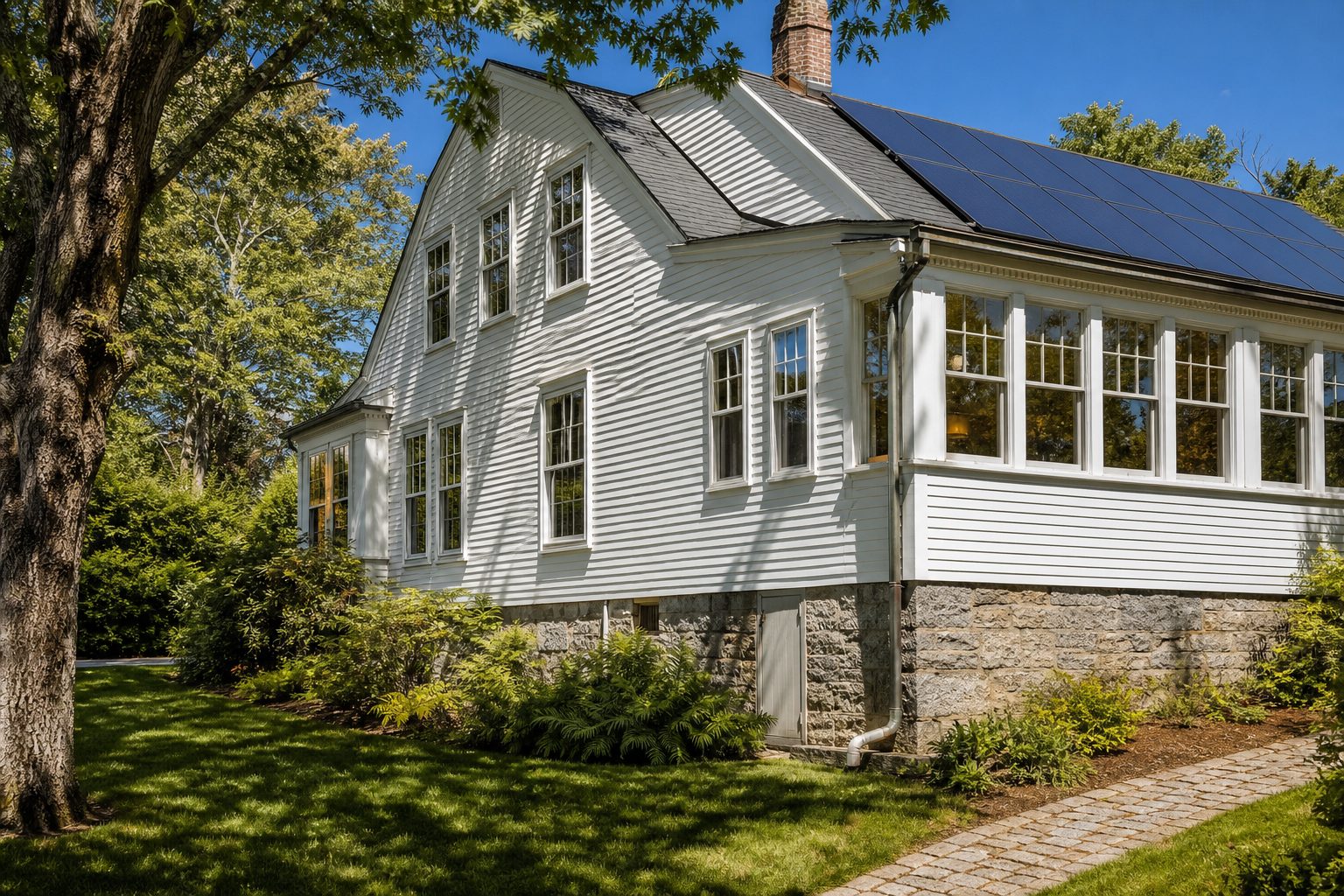
Not every solar installation adds the same value. If you’re preparing to sell, you need to be honest about your system’s condition and documentation:
- Missing paperwork: No warranty documentation, no installer records, no production history? That’s a red flag for buyers and a headache for appraisers. Organize everything before you list.
- Aging roof: If your roof needs replacement within five years, buyers will mentally subtract the cost of removing and reinstalling panels from the system’s value. One seller in Lexington near Clarke Middle School learned this the hard way when their 8-year-old system sitting on a 22-year-old roof prompted buyer requests for a full roof replacement credit.
- Significant shading: Mature maples along streets like Hancock Street in Lexington and Webster Street in Needham are gorgeous. They can also reduce solar production significantly. If your panels are partially shaded, your production data will reflect it.
- North-facing roof planes: Solar economics depend on south-facing or southwest-facing exposure. If your primary array faces north, the numbers rarely justify a premium claim.
With 130 five-star reviews and a RealTrends Top 1.5% ranking, I’ve guided enough sellers through this process to know that transparency about your system’s strengths and limitations builds buyer confidence far more than overselling ever could.
Should You Install Solar Panels Before Selling Your Boston Suburban Home?
This is the question I get most often from sellers who don’t currently have solar. The answer depends on your timeline.
The average payback period for a solar installation in Massachusetts is approximately 7.32 years. If you’re planning to sell within the next year or two, installing a brand-new system specifically to boost resale value is a tough math problem. The average system costs about $2.91 per watt before incentives, and the 30% federal tax credit landscape has shifted following 2025 legislation changes that eliminated the credit for cash purchases.
However, if you installed solar three or more years ago and have been enjoying the savings, you’re in an excellent position. Your system has already begun paying for itself, and you can present buyers with real production data showing actual savings, not projections.
What I recommend to sellers in Needham who are on the fence: focus on what you can control. Make sure your existing system is clean, documented, and producing at capacity. That preparation is worth more than any last-minute installation.
Frequently Asked Questions
How much do solar panels increase home value in Needham, MA?
Based on current research, owned solar panels can add approximately 4.1% to your home’s sale price. For a Needham single-family home in the $1.1M to $1.3M range, that premium could mean $45,000 to $53,000 in added value, depending on system size, age, and condition. The strongest premiums come from well-documented, fully owned systems on south-facing roofs.
Do solar panels help homes sell faster in the Boston suburbs?
Yes. Data shows that solar-equipped homes tend to sell approximately 20% faster than comparable homes without them. In the Boston suburbs, where the median days on market is already just 33 days, that speed advantage can mean the difference between one strong offer and multiple competing offers.
Does a solar lease hurt my home’s resale value in Newton or Lexington?
It can. A solar lease transfers to the buyer as a financial obligation, not an asset. Some buyers walk away from homes with existing leases because they don’t want to assume a long-term payment agreement they didn’t negotiate. If you have a lease, consider buying out the system before listing to convert it from a potential complication into a value-add.
Will solar panels raise my property taxes in Massachusetts?
No. Massachusetts provides a full 20-year property tax exemption on the added value from solar installations under Chapter 59, Section 5, Clause 45. Your solar system will not increase your property tax assessment, regardless of which Boston suburban town you live in.
How much do Massachusetts homeowners save with solar panels over time?
According to EnergySage, Massachusetts homeowners can expect average savings of approximately $154,721 over 25 years on electricity costs, factoring in the upfront system cost. With Massachusetts electricity rates running nearly double the national average, the savings are substantially higher here than in most other states.
What paperwork should I have ready when selling a home with solar panels?
You should organize proof of ownership (or loan payoff confirmation), all warranty documentation, installer contact information, and a full production history showing monthly and annual output. Having this file ready for buyers and appraisers supports a smoother transaction and a stronger perceived value.
How does net metering work for solar homes in the Boston suburbs?
All three major Massachusetts utilities, Eversource, National Grid, and Unitil, are required to offer net metering. Excess electricity your panels produce is credited to your account at the full retail rate. Credits roll over month to month and never expire, making your system’s value proposition even stronger for the next owner.
Is it worth installing solar panels right before selling my Needham home?
Generally, the math is challenging if you’re listing within 12 to 18 months. The average payback period in Massachusetts is about 7.32 years. However, if you already have solar and have been enjoying savings for several years, you’re in a strong position to capture the resale premium without additional investment.
Do buyers in Lexington and Newton care about solar panels?
Absolutely. In high-value suburbs where monthly carrying costs are already significant, buyers pay close attention to energy expenses. A home near Lexington Center or in Newton with documented solar savings stands out against comparable listings, especially when electricity costs are running 29 to 37 cents per kWh.
Can my roof condition affect my solar system’s resale value?
Yes, significantly. If your roof needs replacement within five years, buyers will factor in the cost of removing, storing, and reinstalling panels during re-roofing. Having a newer roof under your solar array eliminates this concern and protects the full value premium your system deserves.
The Bottom Line
Solar panels do increase home value in the Boston suburbs, and in a market where the Greater Boston median single-family price exceeds $1 million, that 4.1% premium translates to real money. The key factors that determine whether your system maximizes its value at sale are ownership structure, documentation, roof condition, and honest production data.
If you’re considering selling your home in Needham, Lexington, Newton, or anywhere across the Boston suburbs and you want to understand exactly how your solar system (or a potential installation) affects your pricing strategy, I’d welcome the conversation. With 25 years of experience and over 252 closed transactions in this market, I help sellers position every asset their home has to offer. Reach out to me, Nancy Moore, at Gibson Sotheby’s International Realty, at (781) 424-3527 to get a clear, data-backed picture of what your home is worth today.

Nancy Moore · Gibson Sotheby's International Realty
Vice President & Associate Broker — Needham & Boston Suburbs
Get in touch →