

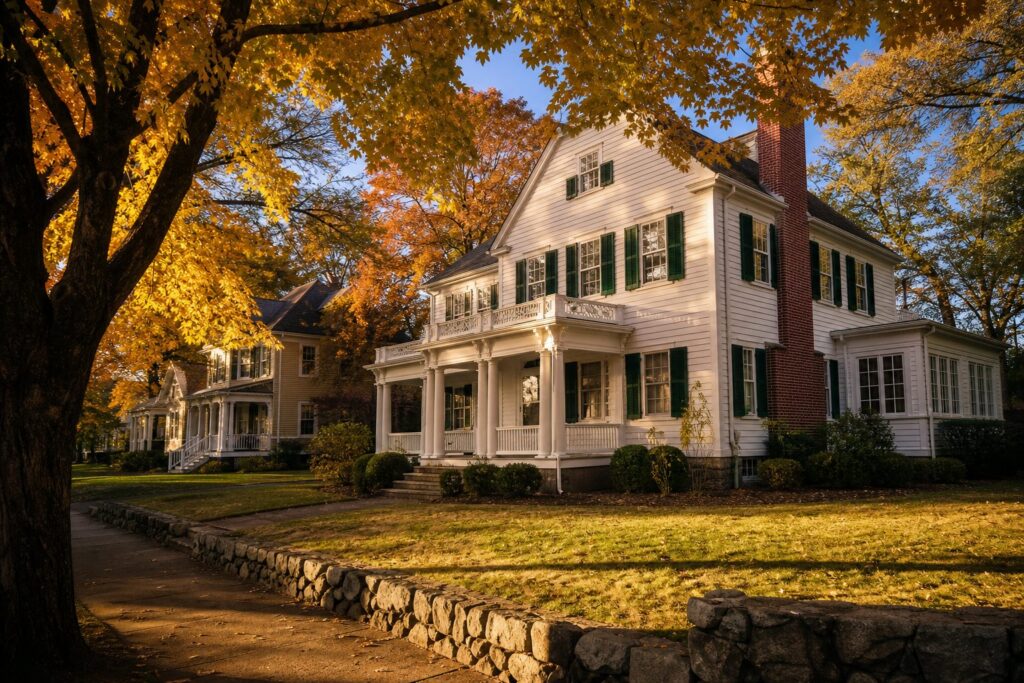
What makes families choose one Boston suburb over another?
Families choosing between Boston suburbs weigh five factors: school quality, commute access, home prices, community character, and the specific micro-neighborhood where their kids will attend school.
Why This Matters Right Now in the Boston Suburbs
If you are selling a home in the Boston suburbs right now, understanding what drives family buyers to pick one town over another is not academic. It is the single most important thing shaping your buyer pool, your pricing strategy, and how fast your home sells.
The Greater Boston Association of REALTORS reported that the median single-family sale price climbed to $1,032,500 in April 2026. Homes are spending an average of 33 days on market, with 93% sold within 90 days and 91% selling for over 95% of the listing price. But here is the catch: this is a two-tier market. Well-priced homes still move quickly while overpriced listings sit. So knowing exactly what your buyers care about, and marketing to those priorities, is what separates a 12-day sale from a 120-day listing.
Having closed over 252 transactions in the Boston suburbs across 25 years, I have watched these decision factors evolve. Let me walk you through exactly what today’s family buyers are weighing.
School Quality Is Still the Top Priority in Boston Suburbs
This will not surprise you. School quality is almost always the number one driver when families choose a Boston suburb. What I tell my clients is that the school district does not just determine where families want to live. It determines what they are willing to pay.
Consider the price tiers across A+ rated districts:
- Wellesley: Median home price approximately $2.15M to $2.20M
- Newton: Median single-family price at $1,825,000 (up 8% year over year)
- Winchester: Approximately $1.54M
- Needham: Approximately $1.4M
- Brookline: Approximately $1.21M
- Belmont: Approximately $1.25M to $1.47M
All of these towns carry an A+ rating from Niche. But notice the spread. You can access a top-tier school system for roughly $1.2M in Brookline or pay nearly double in Wellesley. Families are absolutely comparing these numbers side by side.
What gets even more granular is the feeder pattern question. In Newton, which operates 21 public schools with an average GreatSchools rating of 8 out of 10, families research which elementary school feeds into which of the two high schools, Newton North or Newton South. The Waban to Brown Middle to Newton South pipeline, for example, creates intense demand for homes in that specific neighborhood. Wellesley recently opened a brand-new $250 million high school campus with state-of-the-art facilities, and that investment is already influencing buyer interest.
So if you are selling in Needham or Newton, your listing should clearly communicate school proximity and feeder zone. Your buyer is already researching it.
Commute Times Shape Which Boston Suburb Families Can Actually Choose
School quality gets families interested. The commute determines whether they can actually make it work.
One family I worked with had narrowed their search to Newton Centre and Needham. Both had the school quality they wanted. The deciding factor? The wife commuted to Back Bay daily. Newton Centre’s Green Line D Branch station put her on a 25 to 35 minute ride to downtown. Needham’s commuter rail service on the Needham Line reached Back Bay in about 30 minutes as well, but the frequency and flexibility of the Green Line won out. They bought in Newton Centre.
Here is what your buyers are mapping:
- Newton: Green Line D Branch access at multiple stops (Newton Centre, Newton Highlands, Chestnut Hill), plus Mass Pike access. Commute as short as 18 minutes to downtown Boston.
- Needham: Commuter rail with multiple stops (Needham Heights, Needham Center, Needham Junction), reaching Back Bay in about 30 minutes. I-95 and Route 128 run through town.
- Westwood: Two commuter rail stations make it a strong commuter play.
- Brookline (Coolidge Corner): The most urban-feeling suburb, with Green Line access that puts you in downtown Boston in under 20 minutes.
Infrastructure is also reshaping the map. The arrival of South Coast Rail has turned Fall River and New Bedford into viable commuter hubs, pushing family buyers to consider towns that were not on the radar five years ago.
If your home has strong transit access, make sure your listing highlights it by name. Do not just say “easy commute.” Say “seven-minute walk to the Newton Centre Green Line stop.”
Home Prices and Affordability Create the Real Trade-Offs in Boston Suburbs
Here is where it gets personal. Every family has a budget, and the Boston suburbs force real trade-offs between school quality, commute, and what you can actually afford.
Newton’s median single-family price hit $1,825,000 in 2025, and the average crossed $2M for the first time. But Newton is not one number. Newton Corner and Nonantum tend to be more affordable (around $1M), while Newton Centre, Waban, and Chestnut Hill push well above $2M. Chestnut Hill, with its large lots and proximity to The Street shopping corridor, regularly sees median sales at or above $2M.
What I find is that families who get priced out of Newton and Wellesley increasingly look at towns like Waltham (median single-family near $865,000), Melrose ($650K to $900K), or Franklin, which combines affordability with strong schools and two commuter rail stations.
This trend matters if you are selling. Single-family homes priced in the $800K to $1.5M range are seeing bidding wars across 11 or more towns, with sale-to-list ratios of 105% to 120%. If your home falls in that sweet spot, you are in the strongest possible position. The $2M-plus luxury tier is softer, with buyers in towns like Weston and Dover winning 5% to 8% discounts.
A seller I recently advised in Needham was hesitant to list, worried the market had cooled. But her four-bedroom colonial was priced at $1.35M, right in that high-demand band. She had three offers above asking within nine days. The key was understanding where her home sat in the competitive landscape and pricing it to generate urgency, not to test the ceiling.
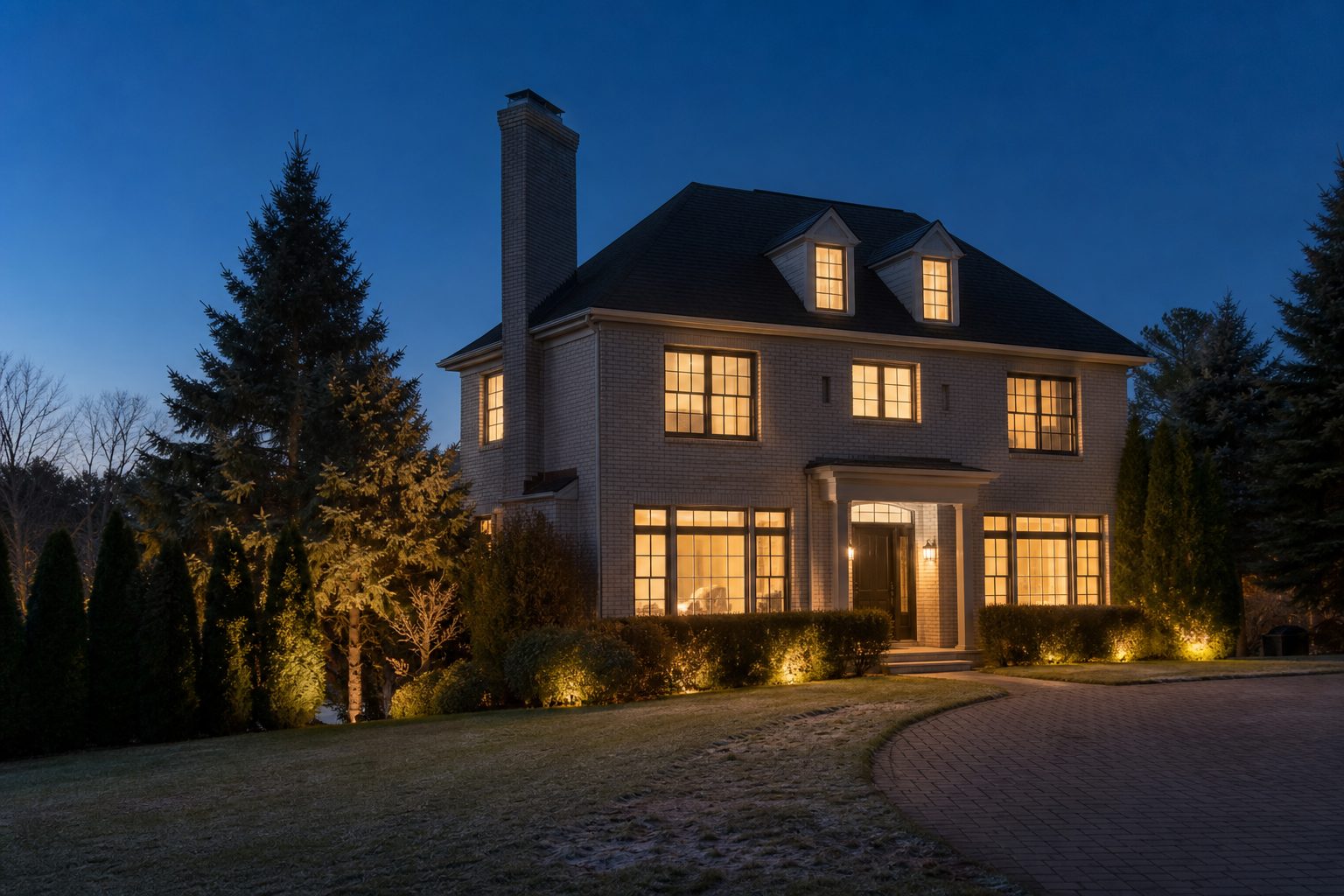
Community Character and Neighborhood Feel Drive the Final Decision in Boston Suburbs
Once families narrow their search by schools, commute, and budget, the final decision almost always comes down to feel. This is the factor that data cannot fully capture, but it matters enormously.
Walk down Centre Street in Newton Centre on a Saturday morning and you immediately understand what village life means. The Green Line D train glides in at street level. From the platform you can count three independent coffee shops, a farmers’ market setup, and families heading toward the playground. It is walkable, vibrant, and connected. A stop at Cabot’s Ice Cream in Newton Corner is practically a rite of passage for local families.
Quiet Suburban Calm vs. Urban Energy
Chestnut Hill, by contrast, is quieter and grander. Wide streets like Hammond Street are lined with stone walls, and the Hammond Pond Reservation offers wooded trails and a kettle pond that feels like a secret kept by the zip code.
Then you have communities like Medfield, which draws families with small-town charm, close-knit neighborhoods, and beautiful parks. Canton attracts families who want strong schools plus the Blue Hills Reservation for weekend hiking. Belmont offers quiet neighborhoods and recently updated school facilities with quick access to Cambridge.
If you are selling and your home is in a walkable village center near local businesses, parks, and schools, that story needs to be front and center in your marketing. Rated 5.0 out of 5 by 130 past clients, I have learned that the most effective listings do not just describe the house. They describe the life a family will live there.
How Sellers in Needham and the Boston Suburbs Should Use This Information
Understanding what families prioritize is not just interesting. It directly impacts how you should position your home for sale.
If you are in a top-school suburb like Needham, Newton, Wellesley, or Winchester, your buyer pool is overwhelmingly families. Highlight school proximity, the specific feeder pattern, walkability to the school, and any recent district investments. In Needham, with its A+ rated schools and median home price around $1.4M, you are competing for the same family buyers who are also touring Newton and Belmont.
If you are in a value suburb like Waltham, Melrose, or Canton, your buyer pool is growing. Affordability pressures continue to push buyers toward suburban and semi-suburban markets, distributing demand more evenly. Year-over-year inventory is up 15%, but demand in the $800K to $1.5M range still outpaces supply dramatically.
The MetroWest cluster, including Framingham, Natick, and Waltham, saw volume up 19.3% and prices up 10.4%, making it the strongest-performing suburban cluster in spring 2026.
What I always recommend to sellers is this: do not just list your home. Tell the story of why a family would choose your town, your neighborhood, your street. That context is what converts a showing into an offer.
Frequently Asked Questions
Which Boston suburb has the best public schools?
Brookline, Weston, and Lexington consistently rank at the top, according to Niche. However, Newton, Wellesley, Winchester, Needham, and Belmont all carry A+ ratings as well. The differences often come down to school size, specific programs, and feeder patterns rather than overall quality.
How much do you need to buy a home in Needham, MA?
Needham’s median home price is approximately $1.4M. With a 20% down payment, you would need roughly $280,000 down plus closing costs. Your household income would likely need to exceed $300,000 at current mortgage rates near 6.47% to qualify comfortably.
Is Newton, MA worth the price for families?
Newton’s median single-family price reached $1,825,000 in 2025. For families, the value lies in A+ schools across 21 public schools, Green Line transit access, and thirteen distinct villages offering different lifestyle options. Prices vary significantly by village, with Newton Corner closer to $1M and Chestnut Hill above $2M.
What are the most affordable Boston suburbs with good schools?
Waltham (median near $865,000), Melrose ($650K to $900K), and Franklin offer strong school systems at significantly lower price points than Newton, Wellesley, or Lexington. Canton and Norwood also provide solid value with growing family appeal.
How long does it take to commute from Needham to Boston?
Needham’s commuter rail service reaches Back Bay in approximately 30 minutes. With multiple stops at Needham Heights, Needham Center, and Needham Junction, you have flexibility in your departure point. I-95 and Route 128 also provide highway access for driving commuters.
Are homes in the Boston suburbs still selling quickly?
Yes. Homes in Greater Boston are averaging 33 days on market, down 8% year over year. In the $800K to $1.5M single-family range, well-priced homes frequently receive multiple offers and sell above asking price. The key is pricing correctly from day one.
Should I sell my home in Newton now or wait?
Newton’s fundamentals remain strong: limited single-family inventory, top-rated schools, and transit access. Single-family listings have not kept pace with household formation since 2022. However, the $2M-plus segment is showing some softening, so your specific price tier matters more than the overall market trend.
What makes Brookline different from Newton for families?
Brookline offers a more urban-suburban feel with walkable neighborhoods like Coolidge Corner and Green Line access to downtown in under 20 minutes. Newton provides a more traditional suburban experience across thirteen villages. Brookline’s median is lower (approximately $1.26M across all types), but lot sizes and single-family options are more limited.
How do Boston suburb property taxes compare?
Tax rates vary meaningfully. Newton’s FY2026 residential rate is $9.69 per $1,000, among the lowest in the inner suburbs. Waltham’s rate is $10.32 per $1,000 but includes a $317,643 residential exemption for owner-occupants. Always compare effective tax burden, not just rates.
What should I highlight when selling to family buyers in the Boston suburbs?
Focus on school proximity and the specific feeder pattern, walkability to village centers and parks, commute options with transit stop names, and community character. Family buyers are comparing your home against two or three towns simultaneously, so your listing should answer the question: why this town, this street, this life?
The Bottom Line
Family buyers in the Boston suburbs are making one of the most consequential decisions of their lives, and they are weighing school quality, commute access, affordability, community character, and micro-neighborhood details with extraordinary care. If you are selling, your job is to understand which of these factors makes your home and your town compelling, then market directly to those strengths.
With 25 years of experience, 252 closed transactions, and recognition as a RealTrends Top 1.5% agent and Boston Magazine Top Producer, I help sellers in Needham and across the Boston suburbs position their homes to connect with the right family buyers. Whether you are in the high-demand $800K to $1.5M range or navigating the nuances of the luxury market, the right strategy starts with understanding your buyer. If you are considering a move, I would welcome the conversation. Reach out to Nancy Moore at Gibson Sotheby’s International Realty, 936 Great Plain Ave, Needham MA 02492, or call (781) 424-3527.

Nancy Moore · Gibson Sotheby's International Realty
Vice President & Associate Broker — Needham & Boston Suburbs
Get in touch →